Monday, 20 May 2013

Wanted!

Candidates are required for positions of great importance within a venerable international institution. Duties include, but are not limited to:

Accountancy, Advocacy, Bereavement Counselling, Charity Work, Childcare, Community Outreach, Conflict Resolution, Elderly Care, Event Management, Expedition Management, Facilities Management, Fund Raising, Gardening, Healthcare, Public Speaking, Relationship Counselling, Teaching, Transportation, Warfare, Wedding Planning

Salary starts at £0 and is expected to rise to £0 upon death. Hours will not exceed 24 hours per day, 7 days a week and candidates are expected to be on call at all times. Training will last for 7 years and may involve international travel.

Position Title: Catholic Priest

Mission: Impossible?


A few weeks ago, it was Vocations Sunday - a day dedicated to promoting and praying for vocations to the priesthood, deaconate and religious life. It has always been the duty of parish and diocese to foster vocations, but given the apparent death of candidates in the western world, Vocations Sunday has been introduced to give higher priority to the cause. If looked at from the secular view point of an occupation, being a Catholic Priest or Religious is a thankless task, possibly beyond the bounds of human endurance. Individuals may be attracted to the position by the opportunity for study and possibility of serving their  community but the long hours, lack of pay, requirement for celibacy and spiritual focus put it at odds with the modern mindset.Though it was formerly a well respected position throughout most of Europe, Catholic priests are today often met with ridicule, misunderstanding or outright hostility outside of their own parishes (and sometimes within!).

London Rome Calling

The key to the Catholic understanding of the priesthood and the religious life can be found in the term "vocation" which derives from the latin "vocationem" which means "calling". A vocation is calling from God whereby "interior and exterior helps, the efficacious graces which have led to the taking of the resolution, and all the graces which produce meritorious perseverance". [1] The church also teaches that vocation is revealed by deliberation according to Faith and Reason (and sometimes by supernatural insight). In short, a vocation cannot be undertaken by earthly means alone - it can only be entered into and maintained by grace. "With men this is impossible: but with God all things are possible". [2]

With great power comes great responsibility

Becoming a priest in the Catholic Church is an an undertaking of the utmost responsibility and gravity. Though all the faithful are called to share in the priesthood of Christ, a priest acts "in personna Christi", in the person of Christ, acting in service of the common priesthood as a means to build up and lead the church. Such is the awesomeness of this undertaking, the church teaches that following their ordination, an ontological change takes place in the candidate - they emerge as a new being, something that they were not before. "Priests are consecrated in order to preach the Gospel and shepherd the faithful as well as to celebrate divine worship" and  in the "sacrifice of the Mass they make present again and apply, until the coming of the Lord, the unique sacrifice of the New Testament, that namely of Christ offering himself once for all a spotless victim to the Father". [3] As St. Maximilian Kolbe said, "If angels could be jealous of men, they would be so for one reason: Holy Communion", and it is through the priest that this is made possible.

The Good, The Bad & The Ugly

If priests are possessed of such dignity and power, why are some of them so sinful? Recent church scandal and a long history of the worst kind of ecclesiastical abuse would seem to cause irreparable damage to the Church's claims for the priesthood. Indeed, there is little denying that like the whole of the Church, the order of priests is a melting pot of Saints, Sinners, the indifferent and the lukewarm.

That priests struggle to live the life of Christian perfection like the rest of us should not surprise us, nor cause us undo scandal. Of the men Christ personally chose to follow him, one betrayed him to death, one denied that he knew him three times and the rest abandoned him in fear of their lives. Though priests share in the priesthood of Christ, they do not have dominion over Christ nor are they afforded inalienable supernatural powers akin to a superhero. The term the Church uses to explain this is "Ex opere operato" - the sacraments confer grace not as the result of activity on the part of the priest or the recipient but by the power and promise of God. A priest might be in mortal sin but that does not affect God's ability to work through him. [4] 

Sexism and Celibacy

Two major issues immediately come to mind in the public sphere when the topic of the priesthood - that of female priests and celibacy. To understand each, one must try to understand the nature of the Church. Catholic theology divides the functions of the teaching office of the Church into two categories: the infallible sacred magisterium and the fallible ordinary magisterium. The infallible sacred magisterium includes infallible papal pronouncements like Pope Pius IX's definition of the Immaculate Conception of Mary, The Fourth Lateran Council's declaration on Transubstantiation and the the common teachings of the Church as understood from Scripture and Sacred Tradition. The ordinary magisterium includes potentially fallible teachings and the authority necessary for church goverance.

The issue of Female Priests falls under the providence of the infallible sacred magisterium and as such, the Church has no authority to change it's position. This position was confirmed by Pope John Paul II's encyclical Ordinatio Sacerdotalis which summarises the reasons for the Church's position as follows:

"The Gospels and the Acts of the Apostles attest that this call was made in accordance with God's eternal plan; Christ chose those whom he willed (cf. Mk 3:13-14; Jn 6:70), and he did so in union with the Father, "through the Holy Spirit" (Acts 1:2), after having spent the night in prayer (cf. Lk 6:12). Therefore, in granting admission to the ministerial priesthood, the Church has always acknowledged as a perennial norm her Lord's way of acting in choosing the twelve men whom he made the foundation of his Church (cf. Rv 21:14). These men did not in fact receive only a function which could thereafter be exercised by any member of the Church; rather they were specifically and intimately associated in the mission of the Incarnate Word himself (cf. Mt 10:1, 7-8; 28:16-20; Mk 3:13-16; 16:14-15). The Apostles did the same when they chose fellow workers who would succeed them in their ministry. Also included in this choice were those who, throughout the time of the Church, would carry on the Apostles' mission of representing Christ the Lord and Redeemer.

Furthermore, the fact that the Blessed Virgin Mary, Mother of God and Mother of the Church, received neither the mission proper to the Apostles nor the ministerial priesthood clearly shows that the non-admission of women to priestly ordination cannot mean that women are of lesser dignity, nor can it be construed as discrimination against them. Rather, it is to be seen as the faithful observance of a plan to be ascribed to the wisdom of the Lord of the universe."[5]

By contrast, priestly celibacy is a law or discipline of the church, enacted with the aim of enabling the Church to better fulfil it's mission. As such, the law of celibacy is subject to change and, in extenuating circumstances, for example for converts from traditions which accept married clergy, can be relaxed. Indeed, for most of the Church's early history, priests, like the apostles and disciples could and did marry. Celibacy only gradually became a universal requirement of the priesthood with a definite movement toward the practice emerging during the eleventh century as papal authority became more effective. 

Some of the arguments for priestly celibacy are historical in nature - it curbed certain ecclesiastical abuses associated with the distribution of Church funds and ensured that the patrimony of a parish was not subject to inheritance. For the most part however, the rule of celibacy is enacted in recognition of incredible demands of the priesthood which is ultimately concerned with the salvation of souls through the imitation of Christ and celebration of the sacraments.

In a society seemingly obsessed with sex and saturated with sexual imagery, the concept of celibacy and chastity is met with incredulity, consternation and ridicule. Some, paradoxically, claim it is at the root of the clerical abuse scandal, repugnantly suggesting that should men with paedophile tendencies be allowed to marry, they would have a legitimate outlet to their "frustrations" or "impulses". Opinions such of these betray a complete lack of understanding of the nature of consecrated celibacy and afford a penurious view of reason's ability to rise above inclination and disordered desire.

Like the priesthood and religious life, celibacy can only be understood in terms of vocation, service and sacrifice. Practically, it would be exceedingly difficult to fulfil the role of priest and husband and father, perhaps to the detriment of both. By focusing on the imitation of Christ, priests are "called to consecrate themselves with undivided heart to the Lord and to 'the affairs of the Lord,'... they give themselves entirely to God and to men". [6] In making the sacrifices required to live a life of celibacy, priests are strengthened in their vocation, recognising that as Christ the Bridegroom is wed to his Church, so they, by sharing in Christ's priesthood, are willing to give themselves up for the Church. [7]


The Incredibles

When you live in a Catholic household, in addition to stories about Superheroes, you also get stories about the Saints, many of whom happen to be priests or religious. Two of my favourite stories concern two priestly saints, St Dom Bosco and St Padre Pio. St Dom Bosco had a great concern for poor and orphaned children, setting up schools to keep them off the streets and out of the hands of organised crime. For this, his personal safety was often threatened but he never worried because his guardian angel turned into a huge black dog and chased nefarious characters away. St Padre Pio of Pietrelcina was an incredible man to whom hundreds of miracles including bilocation and stigmata are attributed. What interested me most however was his ability to read souls. Confessors would often conclude their confession only to be interrupted by Padre Pio who would coax them into remember some sin they had long forgotten.

Like every other Catholic, my experience of the priesthood and religious is as varied as the Universal Church. I have met some truly inspirational priests and religious, some saintly men and women, some who seemed indifferent or totally unsuited to their vocation but were otherwise nice people and others whom I had little time for. I have friends that have become priests and priests that have become friends. Though tasked with a divine vocation, they are all human beings, capable of greatness and ignominy. 

Prayer for Vocations


Lord,
Make me a better person,
more considerate towards others, more honest with myself, more faithful to You.
Make me generous enough to want sincerely to do your will whatever it may be.
Help me to find my future vocation in life and grant that through it I bring happiness to others and find happiness myself.
Grant, Lord, that those whom You call to enter the Priesthood or Consecrated Life may have the generosity to answer Your call, so that those who need Your help may always find it.
I ask this through Christ Our Lord, Amen.


[1] http://www.newadvent.org/cathen/15498a.htm
[2] Matthew 19:26
[3] http://www.vatican.va/archive/ccc_css/archive/catechism/p2s2c3a6.htm
[4] http://www.catholic.com/quickquestions/what-does-the-expression-ex-opere-operato-mean
[5] http://www.vatican.va/holy_father/john_paul_ii/apost_letters/documents/hf_jp-ii_apl_22051994_ordinatio-sacerdotalis_en.html
[6] http://www.vatican.va/archive/ccc_css/archive/catechism/p2s2c3a6.htm#1579
[7] Ephesians 5:22-33

Sunday, 14 April 2013

What does it mean to be human?

Warning - This post contains content many people will find upsetting

This week one of the biggest news items in Catholic circles was what was not making the news. Dr Kermit Gosnell is standing trial in a Philadelphia Courtroom charged with seven counts of first-degree murder yet his victims could number in their hundreds. In any other circumstances, a mass murderer would get national and possibly international coverage which would no doubt contain every lurid detail which could be garnered by the press and squeezed out of the case. What makes Dr Gosnell's case different however is that he was performing late term abortions - it is a case "about a doctor who killed babies and endangered women... he regularly and illegally delivered live, viable babies in the third trimester of pregnancy - and then murdered these newborns by severing their spinal cords with scissors". Dr Gosnell is also accused of overdosing his patients with dangerous drugs, spreading venereal disease with infected instruments, perforating wombs and bowels - and, on at least two occasions, causing their deaths." [1]

More details on the case can be found in an article which contains some graphic images by Conor Friedersdorf at http://www.theatlantic.com/national/archive/2013/04/why-dr-kermit-gosnells-trial-should-be-a-front-page-story/274944/. A summary by Kirsten Powers without graphic images can be viewed at http://www.usatoday.com/story/opinion/2013/04/10/philadelphia-abortion-clinic-horror-column/2072577/ in which she states "You don't have to oppose abortion rights to find late-term abortion abhorrent or to find the Gosnell trial eminently newsworthy. This is not about being "pro-choice" or "pro-life." It's about basic human rights."

The reasons for the failure of major news networks to report the trial which Conor Friedersdorf acknowledges to have numerous elements any one of which would normally make it a major story, clearly lies in the subject matter and what I regard as the "inconvenient truth" of abortion, namely that it places an arbitrary and subjective chronology on what it means to be human. Whether or not a baby can be legally killed could in theory be a matter of days or hours. Looking at it in another way, it could even be the thickness of a womb as babies delivered through failed abortions cannot be legally killed. The application of terms such as foetus or baby can therefore vary in application by time, space and maternal desire. Is there truly a difference between a baby delivered prematurely at 22 weeks which doctors will do everything in their power to save and a foetus removed from the womb at the same date via an abortive "procedure"?

Many of those involved in the Pro-Life cause were outraged by the media blackout on the case and sought to counteract the paucity of coverage by taking to Twitter and other forms of social media to highlight both the case itself and what they regard as a clear case of media bias. I believe that the case is in the public interest, particularly in America where it is taking place and I would hope that it's publication might gradually convince some people that abortion is not a viable solution to unwanted pregnancy and that despite the immense sacrifices and courage required, there is a better way. To this end, I dispatched a few Tweets:

This #Gosnell abortion case really sounds quite horrific :(

The #Gosnell abortion case is quite horrific - the media are afraid to report it for fear of offending liberal sensibilities

The later Tweet produced a response from a friend who thought I was implying that liberals might approve of illegal abortions and gross misconduct which I explained was not my intent. As he suggested, I don't think anyone sane could condone any of Dr Gosnell's actions. 

After we had resolved some misunderstandings, we went on to have an interesting discussion on what it meant to be human and more specifically how we define it. For him, as a Pro-Choice advocate, the issue of legality is important and he used an interesting analogy to describe his position. Law can be used to determine personhood in the same way it does when determining the alcohol limit for driving. Driving above the alcohol limit is drink-driving, while driving if you're slightly below it is not. Where a line must be drawn the law does so but morally, we can recognise a grey area between. To take this analogy further, it affords for scenarios where one individual might be over the limit and another might not having consumed the same amount of alcohol due to differences in physiology or environmental factors.

I rejected this analogy, highlighting that throughout history law has been used to denigrate & extinguish the humanity of many on the whims of a particular interest group and suggested that human life should not be a subjective concept. On this basis, I suggested that conception to death is only definition which made sense. After a brief exchange over why conception was so important and why my definition wasn't extended to eggs    we came to the heart of the debate - what makes us distinctly human?

I began by highlighted that a fertilised egg contained a unique set of human DNA and (without going into the complexity of twins etc) suggested that this had to be our starting point for the definition of human life. Every living person can trace their uniqueness back to this point. He went on to ask  that if DNA was a major part of the definition of what it was to be human, what was my opinion on chimps which share 95% of our DNA, the last common ancestor of chimps and humans, or Neanderthals? I thought this was an interesting point as he was trying to demonstrate that "being human" isn't as rigidly definable as I thought. Could a Neanderthal baby be aborted?

I have to admit that I have never really considered the topic in these terms and am not familiar with the various anthropological and socio-evolutionary factors which might be brought to bear on the debate. I have always considered a DNA analysis of human cells to be concrete but can see how other factors such as intelligence, culture, capability could be more subjective. Ultimately, I suggested these arguments did not have any baring on the abortion debate because they dealt with differences between species. Abortion deals with differentiating within our own species, largely on terms of convenience. How we would deal with "nearly human" species is a very interesting concept, but I argued that nearly human is not human. How we treat other species is nevertheless a mark of our humanity.

This exchange led to a further consequence of attempting to define what is was to be human namely that the first human would be born to technically non human parents. Despite being almost exactly the same as its parents, would that child have all the rights of a human that its parents lacked? Again, though a fascinating concept full of philosophical, theological and anthropological implications, I didn't think this directly impinged on the abortion argument as we can categorically say that any child conceived of human parents was human itself. 

So, the very heart of the argument which can explain our differences was on our choice of definition of what it is to be human. His admitted to the fuzziness at the edges, and mine did not. I was glad to have engaged in this conversation because it was amicable and informative. It has given me further angles to consider and avenues to explore. 

The astute observer will notice that at no point during the conversation did I mention that my position on abortion is underpinned by Christian Faith. I didn't think it was necessary in this instance as I believe the case against abortion can be made by purely rational argument in accordance with natural law. With that said however, I believe that the most fundamental definition of what is to be human is that we are made in the "image and likeness" of God [3]. As children of God, we share in a unique dignity and equality which surpasses all of His other creations. God says to each and every one of us "Before I formed you in the womb I knew you, before you were born I set you apart". [4] I believe that this point is further evidenced in the fact that God became man in Jesus Christ and shared in our human life, from conception in the womb of the Virgin Mary and [5] that even in the womb, His presence was felt by others [6]. 

The last thing I wish to point out on the Gosnell case is that in trying to publicise the story, Pro-life advocates should be careful not to try and use it to their advantage in the same crass manner than some Pro-Choice advocates attempted to profit from the tragic death of Savita Halappanavar. It was widely reported that Mrs Halappanavar died because she was refused an abortion at a Catholic hospital before all the facts of the case became known when in fact she died due to sepsis which went untreated for too long because of a catalogue of errors by staff at the hospital.

[1] http://www.theatlantic.com/national/archive/2013/04/why-dr-kermit-gosnells-trial-should-be-a-front-page-story/274944/

[2] http://www.usatoday.com/story/opinion/2013/04/10/philadelphia-abortion-clinic-horror-column/2072577/

[3] Gen 1:26

[4] Jer 1:5

[5] Luke 1:26-38

[6] Luke 1: 44

[7] http://carolinefarrow.com/2013/04/11/savita-sepsis-and-statistics/

Sunday, 7 April 2013

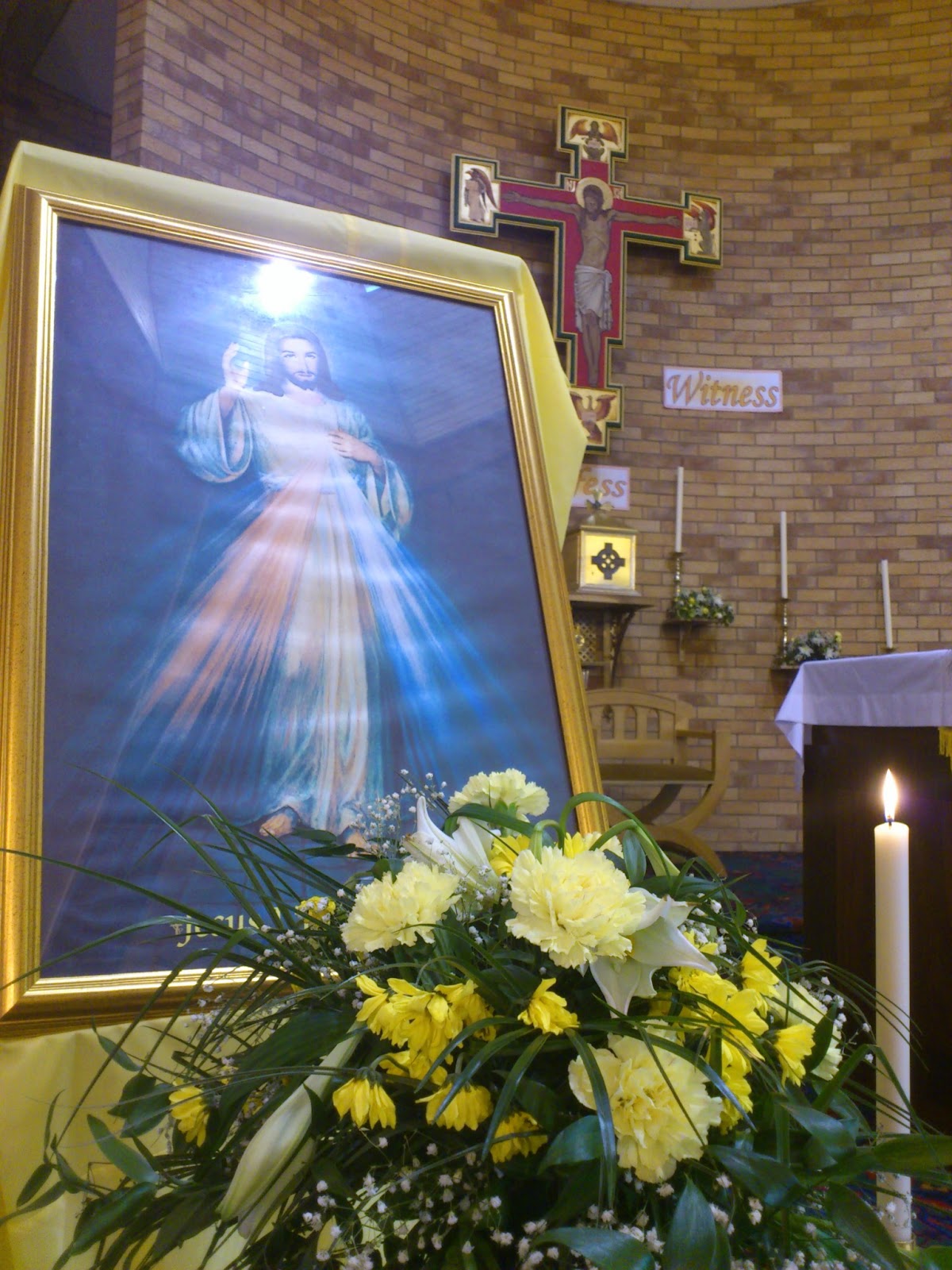
Divine Mercy Sunday

Divine Mercy Sunday
After the Easter Triduum and Christmas, Divine Mercy Sunday is my favourite feast day. Though Divine Mercy Sunday was only officially designated on 30th April 2000 by Pope John Paul II as part of the canonisation process of Saint Faustina Kowalska, largely thanks to the enthusiasm of my father, I have known the devotion all my life. 

My father's two great devotions are to Padre Pio and Divine Mercy. Some of my earliest memories involve travelling around the country with my father to Padre Pio and Divine Mercy events in order to set up stalls, distribute leaflets, sell books and spread the word via cine projector. In the times before these devotions were fully embraced in the Universal Calendar of the Church, the events were often national gatherings of the devout, the curious, the eccentric and the downright crazy - a microcosm of the Universal Church.


Jesus, I Trust in You
For the uninitiated, the devotion to Divine Mercy is based on an encounter with Christ as reported by Saint Fasutina in which He made special provision for his Mercy upon the world. Specifically, Jesus states that the soul that goes to Sacramental Confession and receives Holy Eucharistic Communion on that day shall obtain the total forgiveness of all sins and reparation. The Church also grants a plenary indulgence to those who complete the devotion, pray the Divine Mercy chaplet and venerate the Divine Mercy image.

Though I am very conscious of the dangers of living faith by emotion alone (hence my reticence to get involved with evangelical movements and liturgy), I often experience a great spiritual lift at the end of Divine Mercy Sunday when I consider the power of the promises made by Christ and the state of the faithful soul that affords itself of the graces made available. 

I really cannot recommend this devotion highly enough and more details of the Divine Mercy Chaplet can be found at http://www.catholicity.com/prayer/divinemercy.html. In particular, there is something quite beautiful about praying the chaplet at 3 O'Clock, the hour of Christ's death.

The Divine Mery Image

For the sake of His sorrowful Passion,
have mercy on us and on the whole world.
Jesu, Ufam Tobie! Jesus, I trust in you! 


Saturday, 6 April 2013

Bashing Cymbals in the Pro-Life Movement

I have always been convinced that the Pro-life cause was true and just. When I was younger, I always believed that it was wrong to deprive a baby of his or her existence and believed the issue was clear in its simplicity. As I grew older, I came to understand the terrible pressures that are brought to bear on some women that drive them towards abortion and whilst always convinced that abortion in any circumstances was wrong, I came to accept and understand that the apportioning responsibility for the action was not so clear cut. I also became far more aware of the terrible consequences of abortion on women, parents, families and society as a whole.

Supporting the Pro-Life cause has always been an easy decision for me, particularly as I knew many of the SPUC campaigners from my local area and knew them to be good and honest people. There wasn't any controversy - the Pro-Life cause was clear cut and everyone who agreed with it could get behind and this remained my opinion right until I finished university. It was only with increasing forays into England and increasing use of Twitter that that I came to realise that my view of the Pro-Life was was simplistic and completely wrong.

The Pro-Life world is one of internecine strife where individuals who should be brothers and sisters in arms are involved in ugly and sometimes personal exchanges of vitriol which I believe are damaging the cause and alienating potential supporters. Even when they are not arguing with each other, the language used by many Pro-Life leaders is belligerent and lacking in compassion to such a degree that I have simply stopped listening to them. In this, St Paul readily comes to mind "If I speak in the tongues of men or of angels, but do not have love, I am only a resounding gong or a clanging cymbal" [1 Cor: 13]. 

In considering the root cause of this, I came to realise that the same difficulties have clouded other movements, such as those who support a traditional view of marriage. Whilst the causes may be just, the articulation of the arguments often leaves something to be desired. Internal bickering tends to lead to an escalation in the bellicosity of language (this is a particular problem on Twitter as the limited word count makes nuanced debate impossible) and this language is then projected outwards to the public. Again, I believe this is to the detriment of the cause and puts the battle for the hearts and minds at an immediate disadvantage.

I believe that part of the problem is the all encompassing nature of the work. Many of the people I have met in the Pro-Life cause are obsessed with the issue to the exclusion of all others. Though this is understandable because the cause is so paramount and personal, dealing as it does with the very nature of what it is to be human, I do not believe it is healthy. With such a myopic focus, the greater context of the human condition can be lost and it is only in this context that the Pro-Life cause makes any sense. The issue has to be addressed though the prism of love and compassion and this is sadly lacking in much of the rhetoric I have encountered.

I consider the problems I have encountered with the Pro-Life cause (which are by no means universal) to be a great shame because I also know from experience the various Pro-Life charities and movements do exceptional work in political advocacy, public outreach and and parental support. They literally save lives be it in reaching out women would otherwise have had abortions, counselling those who suffer from post-abortion trauma or providing support to struggling families. All this they do in often hostile circumstances which requires a bravery which is truly noble. I will always support the Pro-Life movement but sadly, I feel this will always be in spite of some of its members.

Thursday, 4 April 2013

Bishop Burns' NGO


It has recently been brought to my attention that the bishop of my diocese, Bishop Burns, had something to say about Pope Benedict and the Church following his resignation in the Bitter Pill. "Conservatism has had its day. It doesn't work. Despite all Benedict's efforts, the Church is losing its place in society – yet the search for God and meaning remain high."He added: "It's time to reopen the doors and windows for a new blowing of the Spirit, a freedom of speech to search for ways ahead that will address key issues like remarriage after divorce; re-examining ethical issues; developing a simpler and humbler Church stripped of status and elitism."

Pope Francis says no to church as NGO

Bishops Burn' vision of the church is exactly that warned aganist by Pope Francis, "a pitiful NGO" [http://www.catholicnews.com/data/stories/cns/1301190.htm] I welcome calls for a reform of the curia in the spirit of simplicity and humility but the Church's mission is to preach Christ crucified and resurrected, not to make compromises with the world. The "popular church" Bishop Burns wants is available in a myriad forms accross the globe where Christ and Christian virtue is an optional extra. Bishop Burns' church is meaningless and will soon be washed away in the tide of secularism, materialism and nihilism until it reaches it's final entropy where it is as bland, inconsequential and insubstantial as any other belief system which places ones own fallen nature and desires at its core. Truth and compassion are not mutually exclusive. I say to Bishop Burns "Liberalism has had its day. It doesn't work".

Celebrating The Blessed Virgin Mary


Today the Church celebrates the birth of The Blessed Virgin Mary. For many churches (perhaps not so much in Britain), the liturgy of today will be marked by processions, special hymns and the veneration of statues followed by a parish celebration featuring food, drink, games and more processions.

The role of The Blessed Virgin Mary in the Church and Salvation History is perhaps the most misunderstood of all amongst Protestants, non-Christians and sadly even Catholics. I remember my grandmother often quipped "Go confess your sins to Mary" when I or my brothers had done something she disproved of - the implication of course that Catholics believed that the Mother of God was herself divine, an accusation spread with gusto following the reformation. I often tried to explain to her that Catholics do not worship Mary as worship is reserved to God and God alone. In doing so, I pointed out that Mary was a created being, just like the rest of us, and that the honour she was afforded by the Church was due to her role as The Mother of God and the part she played in God's plan of redemption. The distinction was largely lost on my Grandmother though, partly I suspect because of her mischievous sense of humour and the fact that she could see it would rile me whenever she said it.  Those impressed by theological terms (my grandmother certainly wasn't one of them) will know that the classical distinction is latria (worship resolved for God alone), dulia (honour paid to the saints) and hyperdulia (the veneration offered to the Blessed Virgin Mary).

For me, the honour afforded to Mary, like her entire life, points to and helps us understand more fully, the nature of her Son, the meaning of his teachings and glory of his life, death and resurrection. She therefore teaches us about Christ, how to relate to Him and how to be more like him.

Biblical Precedent

When I was younger, I was often amazed by the passages of the New Testament where Jesus uses scripture to show how He was fulfilling it. I often thought of it as the prophets of the Old Testament setting out what the Messiah should achieve and Jesus following their instructions. I eventually came to realise however that I had things backward. Christ came first in the plan of God - the events of the Old Testament were rather God teaching Israel and mankind how it would recognise the Messiah through prophecy and archetype. Thus, Jesus' Last Supper and death did not follow the pattern established by the Passover but rather the Passover was designed so that we should recognise the Christ. Similarly, Christ's suffering came before the Song of the  Suffering Servant but the latter became a "signpost" to Christ.

Like Son, like Mother, the Old Testament also offers us an insight into the role of Mary and I offer a few snippets for your consideration. According to the Old Testament, the Messiah was to be a descendant of David and according to Jewish custom, descent was establish through the maternal line. In the archetype of the Old Testament Kingships, two major positions of delegated authority stand out - that of Prime Minister and Queen Mother. As "keeper of the keys", Jesus affords the position of Prime Minister in His Church to Peter and his successors whilst Mary, as Queen of Heaven and Earth fulfils her role as Queen Mother. Perhaps my favourite "signpost" however is the Ark of Covenant. In the Old Testament, the Ark was constructed to hold the tablets of the ten commandments which was set in a tabernacle. When the Ark was completed, the glory of the Lord filled the tabernacle which became the dwelling place of God amongst his people. As the tabernacle was overshadowed by the glory of God, so was the Virgin Mary when she conceived Jesus, thus becoming the new Ark of the covenant. In the Ark of the Old Covenant, God came to his people with a spiritual presence, but in Mary, the Ark of the New Covenant, God comes to dwell with his people not only spiritually but physically. Indeed, the nature of the Ark also acts as a signpost to the nature of Mary. Poor Uzzah, though a good man, was struck dead when he touched the ark in an attempt to steady it, such was its holiness. If Mary were to be saved the fate of Uzzah which all mankind shares as a consequence of sin, she would have to have a share in her son's holiness to such a degree that she be untainted by the original sin of Adam and Eve, not as a result of her own nature, but rather as the first fruits of Christ's life, death and resurrection which reaches throughout all time and space, past, present and future. The doctrine of the Immaculate Conception, so often confused with Virgin Birth has deep roots indeed.

A New Adam and a New Eve

Eve's reputation has suffered terribly on account of the suggestion that having been tempted by the serpent in the garden, she in turn tempted Adam thus leading to the fall of mankind. Eve succumbed to temptation first and many (men) therefore drew the conclusion that when it came to morality, women were weaker than men. One might however suggest that Adam's first sin may have been neglect of his spouse as he is curiously no where to be found when the serpent arrives on the scene. Putting aside those considerations and what the consequence might have been had Eve succumbed to temptation but not Adam, Genesis informs us that evil entered into the world through the sin of both Adam and Eve. If both a man and women were responsible for the fall, it seems plausible to suggest that a man and woman would have a role to play in it's remedy. Adam and Eve's first and primary sin was that of disobedience. The only possible remedy was the complete obedience of Christ, the New Adam, and the grace that was afforded to Mary, the New Eve, who gave her great Fiat to the message of the angel Gabriel. In this sense, Mary's role in Salvation History and mankind's redemption was a  necessary one, not because God had no choice in the matter, but because God had called and chosen Mary.

By recognising and celebrating what is great and good in Mary, Catholics draw attention to the greatness, goodness and glory of God. We are taught that as her obedience to God was complete and her devotion to her Son unsurpassed, she is a worthy template of how we should live our lives and relate with and to Christ. As Queen Mother and as at Cana, she intercedes with her Son on our behalf, always with the advice that we "Do whatever he tells you" (John 2:3-5). As Saint Maximilian Kolbe said “Never be afraid of loving the Blessed Virgin too much. You can never love her more than Jesus did.”

Does sex education have a place in Britain’s Primary Schools?


The following is an assignment I wrote for my PGCE. It still seems relevant today so I thought I'd post it for general consumption.


Britain is facing a sexual health epidemic which is embarrassing the nation and costing the National Health Service (NHS) hundreds of millions of pounds. In order to address this epidemic, campaigners have called for a complete overhaul of the way in which sex education is taught in schools and improved access to sexual health services and advice. Some have called for a more thorough and compulsory programme of primary school sex education, a suggestion which has promoted fierce debate amongst sexual health professionals, politicians, teachers, parents and religious groups. Sex education is an emotive topic as it touches upon aspects of morality and individual and cultural identity. Though its introduction to the primary school curriculum may help to tackle issues such as sexual abuse, pornography, sexual references in popular culture, gender discrimination and sexual harassment and bullying it also raises questions about the relative abilities of parents and teachers to provide such education, the ability of pupils to cope with the information and the suitability of the classroom as a learning environment.

Britain’s teenagers have the highest levels of pregnancy, sexual activity and sexually transmitted diseases (STDs) in Europe (UNICEF, 2007). If left untreated, many STDs such as Chlamydia and Gonorrhoea can result in permanent sterility or infertility whilst some such as HIV/AIDs can lead to death. Teenage mothers are more likely to suffer from premature delivery, anaemia, pregnancy induced hypertension and mental health problems whilst the interruption to their education often damages long term employment prospects, exacerbating a statistically lower standard of living.  Children born to teenage mothers are often underweight, have increased rates of neonatal mortality and suffer as young adults in terms of poorer health, lower educational attainment and a higher risk of economic inactivity. There are also statistically more likely to become teenage parents themselves (Knox, 2002 and Berthoud, Ermisch, Fransesconi, Fiao, Pevalin, and Robson, 2004). For those who opt to terminate their pregnancies, abortion has been associated with potential physical and mental health problems such as an increased risk of infection, infertility, suicide, depression and "post-abortion syndrome" (Fergusson, Horwood & Ridder, 2006 and Ring-Cassidy & Gentles, 2002). The cost of teenage pregnancy to the NHS alone is estimated to be £63m a year. Teenage mothers will also be more likely than older mothers to require expensive support from a range of local services in housing, education, employment and training (DFES, 2006).

                Teenagers are becoming sexually active at an increasingly younger age, more frequently and with more partners and some commentators claim that Britain’s conservative institutions, have failed to recognise this fact. The government’s Social Exclusion Unit indentified low life expectations amongst young women, ignorance regarding contraception, sexually transmitted diseases and parenthood and "mixed messages" regarding sexual activity as the major contributing factors to Britain’s high levels of teenage pregnancy and STDs (DFES, 2005). Critics of current policy such as the UK Youth Parliament, Channel 4, Brooks, Marie Stopes and the Family Planning Association claim that the current approach to sex education is "pedagogically bankrupt" and incapable of dealing with modern concerns (Epstein, O'Flyunn & Telford, 2003).  They have therefore called for a complete overhaul of personal and social education (PSE) and legislation to make it a statutory duty for schools to teach it competently (Times, 2007). Celebrities such as Davina McCall have been recruited to present their case (Channel 4, 2007 and McCall & Naik, 2007).

                Proponents for the introduction of sex education to primary schools primarily draw upon the "Dutch Model" for inspiration. Having gone through the same socio-sexual revolution as Britain, the Netherlands has managed to achieve the lowest rates of teenage pregnancies, abortions and STDs in Europe (UNICEF, 2007). The Dutch Model is "more explicit, coherent and comprehensive" and promotes a high degree of reciprocity between the biological and emotional aspects of the programme, avoiding the largely mechanical instruction given in British Secondary School texts (Lewis & Knijn, 2003). Instead of discussing sex in the context of danger, risk and prevention with undesirable behaviours such as drug use, crime, alcohol abuse and smoking, it encourages individuals to consider sexual scenarios before they arise and then to act responsibly. Lewis and Knijn (2003) suggest that sex has been normalised in the Dutch Curriculum whilst British pupils continue to perceive sex as something "at once dirty, illicit and desirable."

                The success of the Dutch model is attributed to three major factors. Firstly, by introducing sex education to children as young as five, sex and sexuality is normalised, thus preventing the development of embarrassing attitudes which hinder future education. This has contributed to an openness in Dutch society which encourages teenagers to discuss their concerns, rather than act them out. Secondly, by providing information regarding the changes associated with sexual maturation before it occurs, teenagers are more confident with their emerging sexualities and more likely to make informed decisions, often to delay sexual activity until they more emotionally mature (Went, D., 1985). This may be significant as puberty is occurring on average eight months earlier age than thirty years ago and there is a greater incidence of early pubertal maturation which is associated with a variety of negative health and psychological outcomes including adolescent pregnancy. (McCall & Naik, 2007, Dixon & Achmed, 2007 and Ellis & Essex, 2007). Finally, by accepting that teenagers will engage in sexual activity, comprehensive education in the benefits and use of contraception means that they are less likely to engage in unprotected sex.

                Primary school sex education may also help to address some of the negative trends which have created the environment in which teenage pregnancy and STDs have become a problem. Though the "No sex please, we’re British" mind-set is something of a national stereotype, evidence suggests that the British are renitent when it comes to openly discussing matters pertaining to sexuality and are failing to adequately inculcate their children with the knowledge and understanding they require to make informed discussion regarding sexuality and contraception (Blair, 2007). Dutch parents are twice as likely to discuss sex with their children compared to British parents (UNICEF, 2001). A more comprehensive sex education policy is therefore necessary to make up for parental shortcomings, a controversial position as many parents may be offended by what they regard as government or academic interference in their parental prerogative, particularly if they have strong moral or religious objections to the curriculum content. Supporters however claim that much of the success of the Dutch Model is due to the fact that parents are regarded as partners in the process. British parents would benefit from the programme as it would improve their own knowledge and understanding of sexual health, combat prejudices and misconceptions and help them to develop the skills required to converse with their own children regarding issues of sexual health morality. Though this stance has been supported by OFSTED (OFSTED, 2007), critics are likely to remain unimpressed. Many regard the right of parents to choose the education their children receive, particularly in matters of faith and morals, as sacrosanct and see sex education as another tool of the "nanny state".

                Some commentators suggest that primary schools are a more effective and relevant setting for sex education because they can provide quality learning experiences and offer facilities and expertise not available to most parents (Went, D., 1985). The classroom is an ideal environment to discuss issues relating to sex and relationships because it is safe, non-judgmental and open to peer interaction (Buston, Wight & Hart, 2002). However, some pupils may feel vulnerable in sex education lessons as their contribution can lead to ridicule if they do not conform to accepted gender stereotypes. Male and female pupils react differently to the discussion of sexual topics with boys often acting as a disruptive influence on proceedings. The teacher can therefore not always take the previously established classroom environment for granted (Buston, Wight & Hart, 2002 and Walker & Kusher, 1997).
Despite these difficulties, teachers are educative specialists who can draw upon a rich pedagogical background to enrich the learning experience. Drawings, stories, drama, problem pages, puppets and carefully selected fiction could all be used as mediums to teach sex education effectively (Claire, H., 2001). Teachers are also extremely adept at judging individual and group capacity for learning which allows them to determine when children are ready to receive specific areas of the curriculum. Such a view however has to be balanced against the opinions and confidence of individual teachers. Teachers are as likely to feel as embarrassed and reticent in discussing sexuality as parents. A report by the Scottish Executive into the implementation of the Channel 4 Living and Growing programme, found that many teachers were unwilling to discuss homosexuality, contraception and masturbation and altered some of the more explicit cartoons and diagrams included in the support materials (Scottish Executive, 2006). Some may also feel the intimacy required in discussing such sensitive matters blurs the boundaries of professionalism established within classrooms (Van Loon, 2005). Many teachers are also afraid of a parental backlash to controversial topics even though statistically, very few parents discuss sex education with teachers (Buston, Wight & Scott, 2002). Opposition to sex education can nevertheless provoke a high profile reaction. Living and Growing was lambasted in the national press for including the word "clitoris" in material designed for five years olds whilst some schools in Nottinghamshire have been targeted by Christian Groups for promoting "unethical" sexualities (Teachers.TV, 2005 and Salkeld, 2007). Any attempts to introduce compulsory sex education would require a far more comprehensive training programme which aimed to improve the confidence, background knowledge and legal awareness of primary school teachers (Buston, Wight & Scott, 2001).

                Undeterred, supporters claim primary sex education will help counteract some of the negative behaviours associated with developing sexualities. Critics claim that Britain’s educational system either institutionally or incidentally supports a number of traditional and conservative attitudes which are opposed to modern notions of equality. Though the current SRE guidelines claim not to promote one particular sexual orientation (WAG, 2002), they implicitly support a limited and traditional heterosexual family based sexuality (Reynolds, 2005). This "hetronormality" is further exacerbated by the predominantly all female environment and higher ration of male to female headteachers in primary schools which creates a quasi-family unit. The female class teacher represents the benevolent and nurturing mother whilst the male headteacher represents the harsh authoritarian father. Thus clearly defined gender roles and heterosexuality are institutionalised in the primary classroom (Dworetzky, 1998). Gay and lesbian teachers are regarded as "inherent and inevitable dangers", capable of corrupting children’s heterosexual innocence (Reynolds, 2005).

Observations on emerging sexualities in primary schools suggest that the school playground is a cradle for the gendered and sexualised bullying which is used to create and consolidate gender and cultural norms in latter life. Boys tend to define masculinity in terms of violence, sport and misogynistic attitudes which "traduced all things feminine" whilst girls constructed their own femininity "by routinely being subject to, and policing agents of, a heterosexual male gaze" which creates a "hegemonic sexuality" (Reynolds, 2005 and Claire, 2001). Earlier sex education can help to prevent the development of gender, sex and sexuality stereotypes and homophobic sentiments which limit individual aspirations and can lead to bullying because it helps to normalise divergent genders and sexualities. A corollary of such an education is that pupils who come from backgrounds which deviate from the traditional heterosexual two parent family norm will feel less stigmatised and more confident in their particular identities. This is particularly important as the proportion of all people living in "traditional" family households of married couples with dependent children fell from 52% to 37% between 1971 and 2007 (Self & Zealey, 2007).

                A further benefit of introducing sex education at an earlier age is that teachers can ensure that children receive reliable information. The current reticence of parents and schools to provide adequate sex education has forced children and teenagers to look for information elsewhere, often from dangerous and unreliable sources. Popular culture is saturated with sexual imagery and messages which promote a distorted view of human sexuality with little reference to the potential risks, emotions and morality of sexual activity. One study suggests that teenagers with high exposure to television with a sexual content were twice as like to initiate sexual intercourse in the following year (Collins, Elliott, Berry, Kanouse, Kunkel, Hunter and Miu, 2004). Modern society makes few attempts to separate children from such imagery whilst symbols of childhood such as school uniforms and sweets have been loaded with sexual meaning (Reynolds, 2005). It is therefore possible for Bebo to be both a popular children’s social networking site and a host for Nuts TV which "rates" naked women according to their sexual desirability (Bebo, 2007). Pornography is particularly problematic as it actively promotes a distended sexuality which is sometimes violent, misogynistic and degrading. It can also be used to exploit children, particularly those who are most vulnerable such as those with special educational needs. The universal nature of the internet makes it easier for paedophiles to make contact with children, exploit their ignorance and distribute their material (Stock, 2004). Earlier sex education can therefore help to alert children of the dangers posed by distorted views of human sexuality, nullify misconceptions and satisfy their natural curiosity for answers to questions provoked by their everyday experiences.

                The sexualisation of children by popular culture touches the very heart of the debate on the nature of childhood. Critics claim that primary school sex education would deprive them of their natural innocence and result in greater levels of sexual activity, a claim vociferously contested by some sexologists and psychologists (Lewis & Knijn, 2003). Research from the United States suggests that there is no significant correlation between sex education and the frequency of sexual behaviour or the age of first sexual intercourse (Somers and Eaves, 2002) though this has to be balanced against research which suggests most teenagers have already been "sexualised" by exposure to popular culture which makes such claims irrelevant (Stock, 2004). Epstein and Johnson in Reynold (1998) suggest that sexual innocence is a myth which adults have wished upon Primary school children who in reality are exposed to, and have opinions on, a variety sexual issues including teenage pregnancy, abortion, prostitution, sexual abuse, homosexuality (Claire, 2001). Reynolds concludes that "it is ridiculous to assume that children don’t draw conclusions from the visible, invisible and imagined sexual behaviour of adults and children around them" (Reynolds, 2005). However, just because a particular behaviour is observed does not necessarily mean that behaviour is "natural". Much of the work on developing sexualities appears to have been greatly influenced by the work of Freud which is now regarded as "unscientific, eccentric and absurd" (Mitchell and Ziegler, 2007). Where one sociologist sees children engaging in proto-sexual activity, another simply sees childhood play and mimicry of adult behaviour. It therefore difficult to support assertions which apply adult concepts to childhood behaviour such as Reynolds’ claim that Year Six girls "police each other’s bodies as heterosexually desirable commodities" (Reynolds, 2005).

                Using the arguments presented, proponents for the introduction of sex education into Britain’s Primary schools conclude that they have an excellent case and a plausible implementation candidate in the Dutch Model. Such a view however does not take into account the broader cultural factors associated with sex education, a fact recognised by every major proponent and critic. One could argue that the current policies and proposals address the consequences of teenage sexual activity, rather than the causes. It is a response which is being driven by the sexually explicit references children are exposed to by popular culture which has set new norms which "undermine the educational and moral authority of parents and schools" (Van Joost, 2005). It is one thing to acknowledge that children are exposed to a highly sexualised culture but that does not mean that we should countenance the sexualisation of primary school children. One child I encountered in a Year Six class appears to have been highly affected by the sexual content films and the Internet. He used vulgar language towards his female peers, allowed his apparent sexual interest in women to enter into his creative writing and was heard to remark that he wished he had "got a girl drunk" when he was going out with her. It is doubtful that knowledge of contraception and female anatomy would address such inappropriate behaviour. Early sexual experiences are detrimental to the physical and psychological health of adolescents and a high percentage of those who engaged in sexual activity before they were 16 regret it (O’Keeffe, 2003 & DFES, 2006).  It is for this reason that the Scottish Executive’s sexual health strategy is based on the premise that "sexual relationships are best delayed until a person is sufficiently mature to participate in a mutually respective relationship" (Scottish Executive, 2006)

                There is little empirical evidence to suggest that the introduction of Dutch style sex education system will be a success in Britain. Recent attempts to introduce a sex education programme using methods similar to the Dutch Model in Scotland proved to be more popular amongst pupils but no less likely to cut teenage pregnancies (MRC, 2007 & Sample, 2006). Dr Joost van Loon questions the effectiveness of the Dutch Model suggesting that there is no standard model of sex education in Dutch schools, that sex education does not begin at a younger age in the Netherlands nor is it more explicit or permissive than in Britain. He argues that the most significant factor in teenage pregnancy is family structure: the children of single-parent and non-traditional homes are more likely to be sexually active at a younger age. British children are five times more likely to be in single-parent families than their Dutch counterparts and more likely to be in third party care or to find their mothers out when they get home from school (Van Joost, 2003). Even early pubertal maturation is associated with parental investment as high levels of psychosocial stress accelerate reproductive development (Ellis & Essex, 2007). Responding to a recent UNICEF report, Professor Sir Al Aynsley-Green, The Children's Commissioner for England, suggests that Britain has produced a generation of young people who are "unhappy, unhealthy, engaging in risky behaviour, who have poor relationships with their family and their peers, low expectations and don't feel safe" (UNICEF, 2007 and  BBC, 2007)

                It can therefore be argued that the levels of teenage pregnancy and STDs can be better understood in the context of the low life expectations amongst Britain’s teenagers. Sexual risk taking amongst adolescents (defined as unprotected and multiple partner sex) can be predicted by examining academic ability, alcohol consumption, parental monitoring and contact, suicidal ideations and histories of sexual abuse. Sexual risk takers have more opportunities to engage in risk-taking behaviours (e.g. low levels of parental monitoring) and fewer incentives for avoiding risks (poor prospects for higher education or employment) (Luster & Small, 1994). Increased sex education and access to abortion and contraception will not necessarily help to bring down the rate of teenage pregnancies and STDs. Economists such as Professor David Paton, suggest that the principle of "Moral Hazard" demonstrates that as abortion helps to alleviate some of the risks associated with having sex and a confidentiality agreement means that their parents need never know about it, more individuals will engage in risky sexual activity. The pregnancy rate amongst teenagers may therefore increase as some adolescents who think they will opt for an abortion if they get pregnant may not do so when faced with the actual decision. Riskier sexual behaviour also decreases the effectiveness of contraception which increases the risk of infection with an STD (Paton, D., 2002). Indeed, there are some dangerous STDs from which contraception offers no protection and the only method with 100% efficiency is abstinence. Philip Levine supports this research and the view that low expectations are at the root of the problem claiming that "measures which improve the educational and work prospects of those groups most at risk seem likely to help achieve the stated aim of reducing underage conceptions" (Levine, 2003).
               
                It is clear that sexual abuse, pornography, sexual references in popular culture, gender discrimination and sexual harassment and bullying are matters of concern for some primary school children and most teenagers and that the primary school environment provides an excellent opportunity to inculcate some of the knowledge, skills and understanding which would help them to tackle these issues whenever they arise. It can be argued however that most primary school children lack the cognitive and emotional capacity to place adult sexuality and behaviour in context. Most of these issues can therefore be confronted without explicit reference to sex or sexuality because they are related to matters of self esteem and respect for others. Dr Kate Worsley, of Marie Stopes International suggests that a more comprehensive sex education policy is necessary because "abstinence messages conflict with all the other messages about sex which teenagers receive from the culture around them. And a cultural shift is very difficult to achieve"(O'Keeffe, 2003). However, as it is the social context which is driving the high rate of teenage pregnancies and STDs, a cultural shift is what is needed. It is here that primary schools may be best able to address the issue. If teachers and schools are able to provide pupils a quality education which inculcates the knowledge, skills and understanding to increase their future opportunities and prospects, then Britain’s children may not suffer a "poverty of aspiration."


References


BBC (2007) UK is accused of failing children [www] http://news.bbc.co.uk/1/hi/uk/6359363.stm (17 February 2008)

Bebo (2008) Nuts TV [www] http://www.bebo.com/nutstv (17 February 2008)

Berthoud, R., Ermisch, J., Fransesconi, F., Liao, T., Pevalin, D. and Robson, K. (2004) Teenage Pregnancy Research Programme research briefing, Institute for Social and Economic Research (ISER) University of Essex

Blair, A. (2007) Parents ‘failing sex education duty’ [www] http://www.timesonline.co.uk/tol/news/uk/education/article1642771.ece (17 February 2008)

Buston, K., Wight, D. and Hart, G. (2002) Inside the sex education classroom: the importance of class context in engaging pupils, Culture, Health and Sexuality, vol. 4(3), 18pp. 317-35

Buston, K., Wight, D. and Scott, S. (2001) Difficulty and Diversity: the context and practice of sex education, British Journal of Sociology of Education, vol.22(3), 16pp. 353-368

Channel 4 (2007) Let’s Talk Sex [www] http://www.channel4.com/learning/microsites/L/lifestuff/content/up_close/letstalksex/index.html (17 February 2008)

Claire, H. (2001) Not Aliens: Primary School Children and Citizenship/PHSE Curriculum, Trentham Books Ltd

Collins, R., Elliott, M., Berry, S., Kanouse, D., Kunkel, D., Hunter, S. and Miu, A. (2004) Watching Sex on Television Predicts Adolescent Initiation of Sexual, Behavior Pediatrics, vol. 114 20pp 280-289

Dixon, J. and Achmed S. (2007) Precocious puberty, Paediatrics and Child Health, Vol 17, 6pp. 343 - 348

DFES (2006) Teenage Pregnancy: Accelerating the Strategy to 2010, DFES

DFES (2005) Teenage pregnancy [www] http://findoutmore.dfes.gov.uk/2005/08/teenage_pregnan.html (17 February 2008)

Dworetzky, J. (1998) Introduction to Child Development (Sixth Edition), West Publishing Company

Ellis, B. & Essex, M. (2007) Family Environments, Adrenarche, and Sexual Maturation: A Longitudinal Test of a Life History Model, Child Development, Vol 78(6) 18pp. 1799 – 1817

Epstein, D., O'Flyunn and S., Telford, D. (2003) Silenced Sexualities in Schools and Universities, Trentham Books Ltd

Fergusson, D., Horwood, L. and Ridder, E. (2006) Abortion in young women and subsequent mental health, Journal of Child Psychology & Psychiatry, Vol.47(1), 9pp. 16-24.

Knox, E. (2002) Perinatal Review - Teenage Pregnancy [www] http://www.perinatal.nhs.uk/reviews/tp/tp_review.htm (17 February 2008)

Lewis, J and Knijn, T (2003) Sex Education Materials in The Netherlands and in England and Wales: a comparison of content, use and teaching practice, Oxford Review of Education, Vol.29(1), 38pp. 113 – 150

Levine, P. (2003) Parental involvement laws and fertility behaviour, Journal of Health Economics, vol.22, 18pp. 861–878

Luster, T. and Small, S. (1994) Factors Associated with Sexual Risk-Taking Behaviours among Adolescents, Journal of Marriage and the Family, Vol.56, 11pp. 622 - 632

McCall, D. and Naik, A. (2007) Let’s Talk Sex, Channel 4 Books

Mitchell, P. and Ziegler, F. (2007) The Psychology of Childhood, Psychology Press

Medical Research Council (MRC) (2008) SHARE Sexual Health & Relationships [www] http://www.sphsu.mrc.ac.uk/studies/share/index.php?Page=23&mitem23=1

O'Keeffe, A. (2003) Teenage sex: don't scoff at abstinence [www] http://www.newstatesman.com/200311100014 (17 February 2008)

OFSTED (2007) Time for change? Personal, social and health education, OFSTED

Paton, D. (2002) The Economics of Family Planning and Underage Conceptions, Journal of Health Economics, Vol.21(2), 19pp. 27-45

Ring-Cassidy, E. and Gentles, I., (2002) Women’s health after abortion, De Veber Institute [www]
http://www.deveber.org/text/chapters/Preface.pdf (17 February 2008)

Reynolds, E. (2005) Girls, Boys and Junior Sexualities, Routledge Falmer

Salkeld, L. (2007) Outcry over explicit sex education video shown to five-year-olds, The Daily Mail [www] http://www.dailymail.co.uk/pages/live/articles/news/news.html?in_article_id=438621&in_page_id=1770 (17 February 2007)

Sample, I (2006) Sex education course fails to cut teenage pregnancies [www]
http://education.guardian.co.uk/sexeducation/story/0,,1953191,00.html (17 February 2008)


Scottish Executive (2006) Sex Education in Primary School in Tayside: An Evaluation of Sexuality and Relationships Training for Primary Teachers [www] http://www.scotland.gov.uk/Publications/2006/10/16125802/0 (17 February 2008)

Self, A. and Zealey, L. (eds) (2007) Social Trends, Office for National Statistics

Somers, C. L., and Eaves, M. W. (2002) Is earlier sex education harmful?:  An analysis of the timing of school-based sex education and adolescent sexual behaviours,  Research in Education, vol.67, 10pp. 23-32

Stock, P (2004) The Harmful Effects on Children of Exposure to Pornography, Canadian Institute for Education on the Family

Teachers.TV (2005) School Matters - Early Sex Education [www] http://www.teachers.tv/video/401(17 February 2007)

UNICEF (2001) A League Table of Teenage Births In Rich Nations, UNICEF

UNICEF (2007) Child poverty in perspective: An overview of child well-being in rich countries, UNICEF

Van Loon, J (2003) Deconstructing the Dutch Utopia: Sex Education and Teenage Pregnancy in the Netherlands, Family Education Trust

Van Loon (2005) in School Matters - Early Sex Education – The Debate, Teachers.TV [www]
http://www.teachers.tv/video/1426 (17 February 2007)

Walker, B. and Kushner, S. (1997) Boys: Understanding boys' sexual health education and its implications for attitude change [www] http://www.uea.ac.uk/care/pubs/bwboyrpt.rtf (17 February 2008)

Welsh Assembly Government (WAG) (2002) Sex and Relationships Education in Schools, WAG

Went, D. (1985) Sex Education: Some Guidelines for Teachers, HarperCollins Publishers